
Interning at the Fashion Archives and Museum of Shippensburg University
This summer (2025), I served as an intern at the Fashion Archives & Museum of Shippensburg University. Completing the internship not only fulfilled the capstone requirement for the Master of Arts in Applied History, but provided in depth experience to practice cataloging and textile collection storage while improving my familiarity with PastPerfect museum cataloging software.

In addition to operating the museum by myself most Saturdays, above you’ll see my main summer project: review Cabinet 47A in the museum’s storage space, ensure that each item was thoroughly cataloged, marked, and photographed–correcting issues as found–and carefully repack it in the archival storage box. The above photograph shows the completed rack, although the differences before and after are not readily visible from the outside.
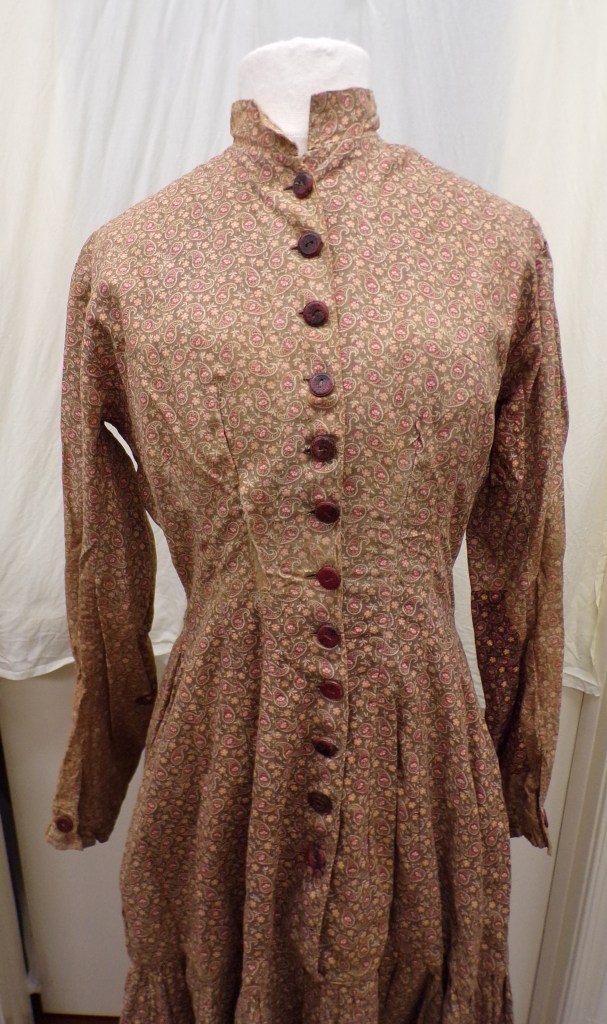
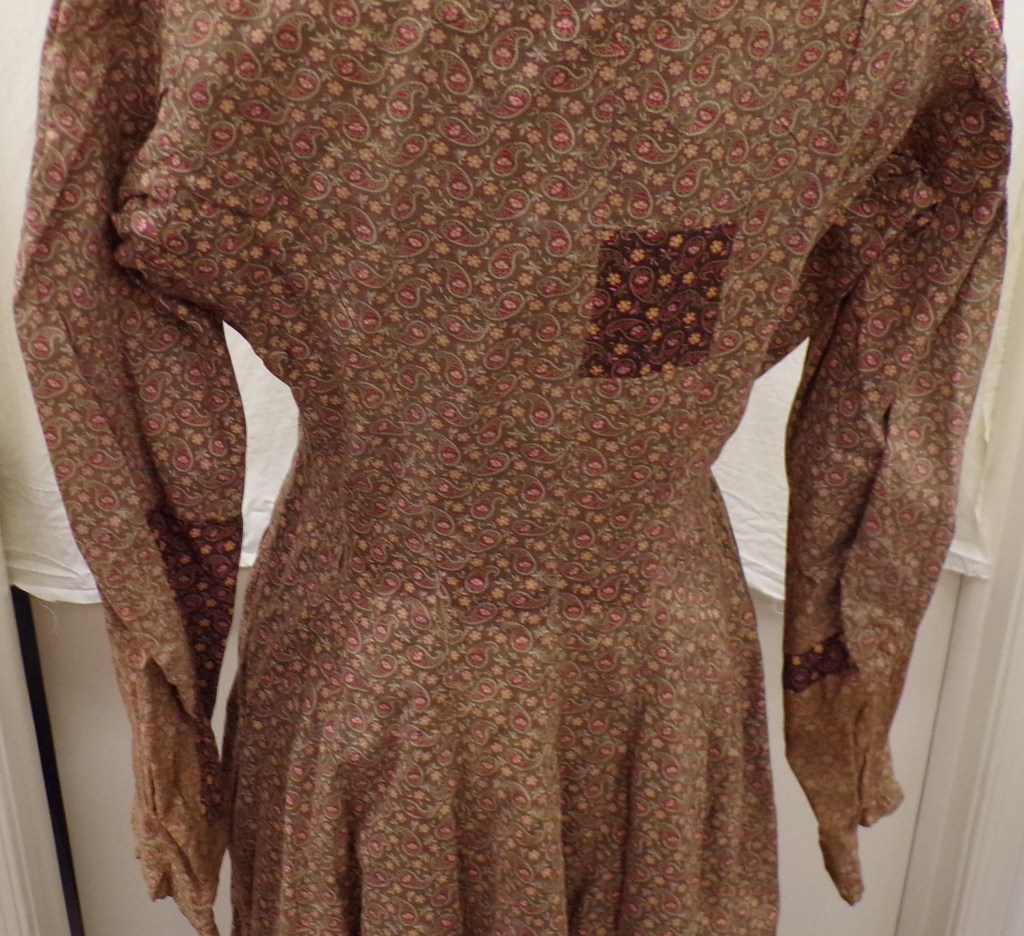
Fortunately, we don’t typically go through the trouble of a full-exhibit mannequin display for internal documentation purposes–a proper display takes hours for a single garment–but I did ensure to capture damage and unique features that help document an object’s condition and assist in interpreting the object’s history. Here we can see repair patches to the back and sleeves that witness the dress’s long life in service. The faded sleeves indicate that in its last iteration it likely served as a house dress, worn for utility while performing chores like washing that particularly affected the sleeves. Occasionally, we’re fortunate to have provenance back to the original owner, which provides another avenue to present insight into the lives of the people who owned, made, altered, and wore the garments.
Storage is both a science and an art, and a museum professional needs to make decisions that weigh the compromises between ideal and practical storage solutions. In this case, the first major decision–whether to box or to hang the garments–had already been made. After cataloging, each piece needed to be carefully folded and wrapped in acid-free tissue paper, with supports padding where appropriate for sleeves, skirts, and folds made strategically to minimize wrinkling and stress over the coming decades, to ensure these artifacts are still around and presentable to educate museum visitors in the future to come.
For me, the internship extended the training and theoretical education I received in HIST 542: Textile History & Museum Methods. My work at the Fashion Archives allowed me to apply those skills kinetically, which will help me retain and better apply knowledge gained in the classroom. I came out of the course with a developing confidence in textile artifacts; I came out of the internship fully prepared to deploy those skills!
 Historical Chesnuts