Historical Chesnuts

Exploring the Past

  • About the Historical Chesnut
  • Resume
  • Curriculum Vitae

  • Graduation

    Now that graduation has come and gone, and I have earned the Master’s hood, the question becomes, “now what?”
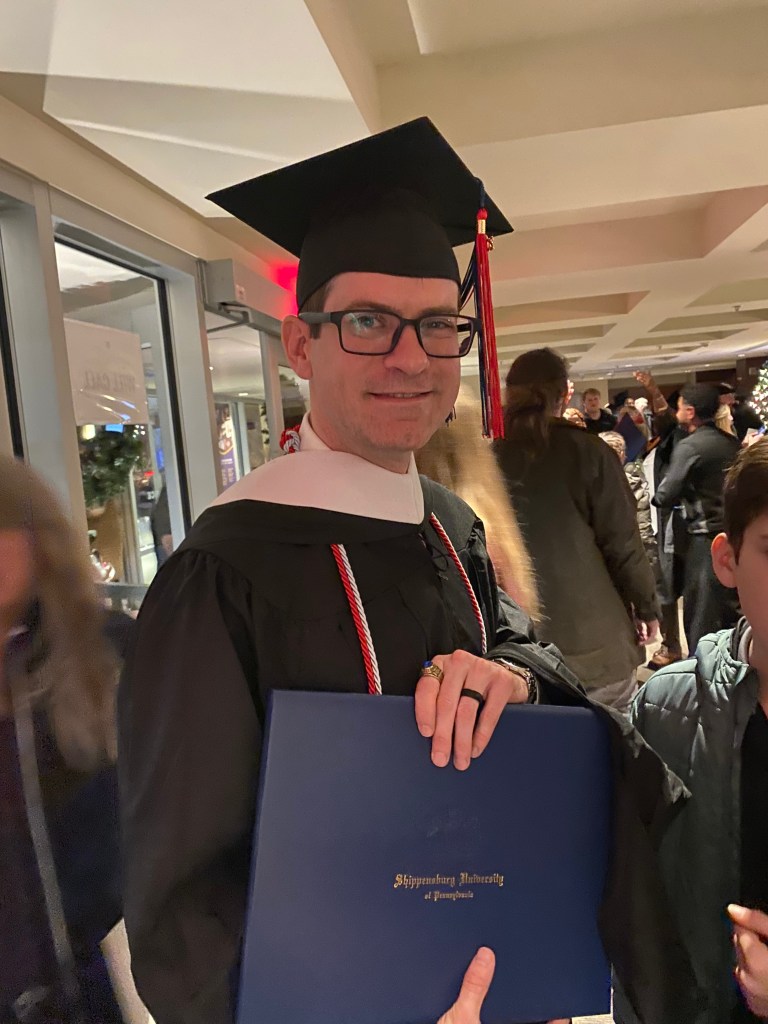
    My time at Shippensburg University fulfilled my long-time dream of returning to school for an advanced degree in the historical field, but the degree constitutes no end goal in its own right. I intentionally focused on completing my credits, which was difficult enough combined with work and family responsibilities, but now I can contemplate the future.

    Earning a living in History presents challenges. I need not cite any studies for the basic universal fact that there are many more graduates than jobs, let alone sustainable careers. Add to that the limited opportunities among the mostly small museums and organizations in and near South Central Pennsylvania. Fortunately, I chose the degree for my own satisfaction and enjoyment rather than its marketability.

    I plan to remain current in the historical field in a few ways.

    1. Refine several projects and papers for publication: At least three of my unpublished works beg for publication in historical society journals or elsewhere
    2. Continue serving with the Franklin County Historical Society: I’m especially excited to have more time for this now and take on the opportunity to join the Board of Directors
    3. Continue working with the Shippensburg Fashion Archives & Museum: I’ve been recruited for my writing prowess to edit and draft more digital exhibits
    4. Keep reading and learning: I so enjoyed the Roman History & Legacy course that I completed as a visiting student through Slippery Rock University that I have decided to learn to read classical Latin, and I also have a stack of books and journals that I now have time to read. For now, it’s Tacitus’ Agricola and Germania (in English), and Dr. Allen Dieterich-Ward’s Cradle of Conservation: An Environmental History of Pennsylvania.
    5. Visit and explore as many of our local and regional assets and organizations as I can.

    Will I ever get paid to do these sorts of things? In a manner of speaking, I already have.

    -Andrew R. Chesnut, MA

    December 22, 2025
    books, education, history, writing

  • Franklin County Historical Society – Kittochtinny

    I am honored to announce that I will join the Board of Directors of the Franklin County Historical Society – Kittochtinny, based in Chambersburg, Pennsylvania, for a three-year term.

    FCHS-K has preserved, researched, published, interpreted, and promoted Franklin County’s history for 127 years. It is an honor to be entrusted with this role for one of the chief custodians of county history in our little piece of South-Central Pennsylvania.

    December 9, 2025

  • The Maria Tyson Gowns

    This page took a long time to come to fruition. It started in Fall 2024 as a collaborative group project in HIST 542: Museum Education, to interpret an object in the Fashion Archives & Museum’s collection. Two classmates and I were assigned a pair of dresses formerly belonging to Maria Tyson (pronounced like “Mariah”), a “Quaker” (member of the Society of Friends) in Gettysburg during the Civil War. In our research, my group found that the Meeting in Aspers, PA to which Tyson and her husband belonged is still active. Their secretary put us in touch with one of Maria’s descendants, who was kind enough to invite us to her home to peruse the (well organized!) family archives.

    Always read your course syllabi carefully. We three scholars thought that we were creating a web page exhibit, when the end product was actually a live presentation. Fortunately we discovered our mistake early, but as we had already promised our host a digital exhibit, our professor allowed us to create one. Based on the group’s research, I crafted the page in Spring and Summer 2025, with final edits by FA&M Director Dr. Bohleke. As for the rest, I will let the exhibit speak for itself!

    The Blue and the Gray Dress: Maria Tyson’s 1863 Wedding Gown

    One last thing that I’m rather proud of–the header image of a 3″ ordnance rifle on Gettysburg battlefield is my own work. The key to getting a great photograph is to take about a dozen photographs from different angles and then select the best one.

    October 13, 2025

  • Clem Chesnut: Profile of a Normal School Graduate

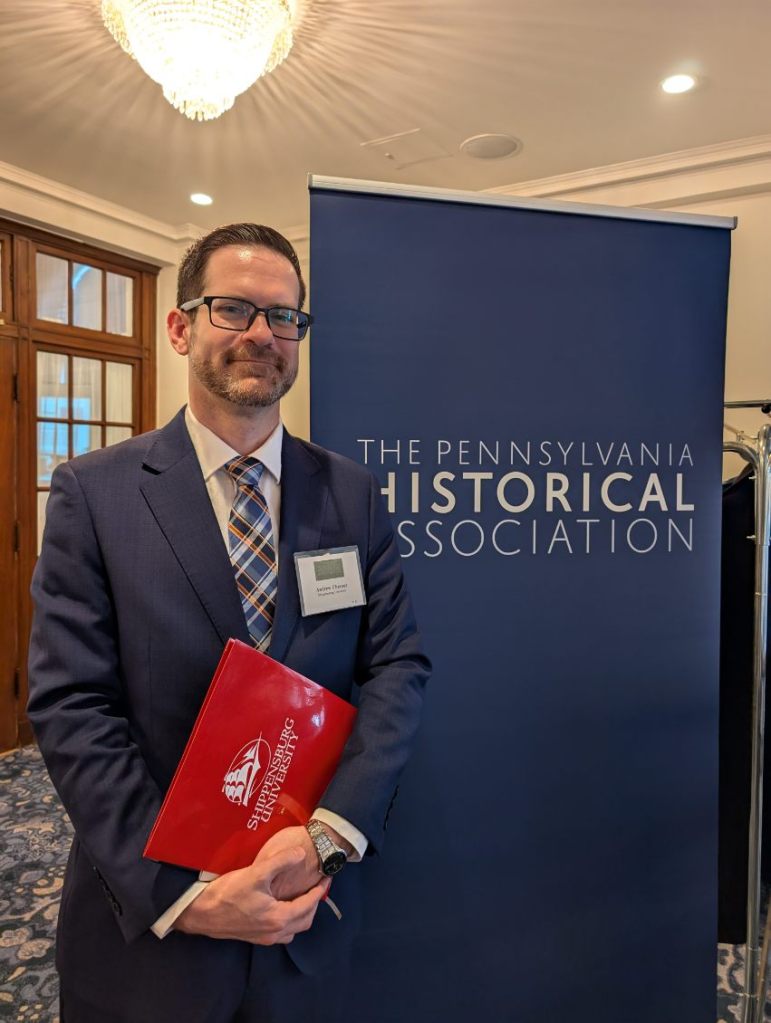
    This October, I had the honor of presenting a paper at the 2025 Pennsylvania Historical Association conference in York as part of the “Voices of Change in Education” panel. The panel constituted a wonderful variety of presentations on progress in the 19th and 20th centuries, as well as one presentation by a current ongoing project to involve students in interpreting their own history.

    My paper concerned my thrice-great uncle, Clem Chesnut, an 1886 graduate of Cumberland Valley State Normal School, and my predecessor at Shippensburg in more ways than one. Clem went on to a career in Fulton County as a teacher, county superintendent, and one-time state legislator, showcasing the positive influence and progress of the state normal schools even as they transitioned from private entities into state teachers’ colleges and ultimately the modern PASSHE system in Pennsylvania.

    Left: Myself, 2025 PHA Conference, photograph by Amanda Chesnut. Right: Clem Chesnut, Class of 1886, located in the Shippensburg University Archives & Special Collections, photograph by H. Frank Beidel, Shippensburg.

    Shippensburg University funded my endeavor with a grant from The Graduate School’s 2025 Graduate Research and Travel Grant program. Thank you to my fellow panelists and the audience for a lively panel and discussion, to our Chair Dr. Scott Wert for his constructive feedback and moderation, and professor and faculty advisor Dr. John Bloom for gently encouraging/requiring the presentation of my research.

    October 11, 2025

  • Cataloging & Artifact Storage

    Interning at the Fashion Archives and Museum of Shippensburg University

    This summer (2025), I served as an intern at the Fashion Archives & Museum of Shippensburg University. Completing the internship not only fulfilled the capstone requirement for the Master of Arts in Applied History, but provided in depth experience to practice cataloging and textile collection storage while improving my familiarity with PastPerfect museum cataloging software.

    In addition to operating the museum by myself most Saturdays, above you’ll see my main summer project: review Cabinet 47A in the museum’s storage space, ensure that each item was thoroughly cataloged, marked, and photographed–correcting issues as found–and carefully repack it in the archival storage box. The above photograph shows the completed rack, although the differences before and after are not readily visible from the outside.

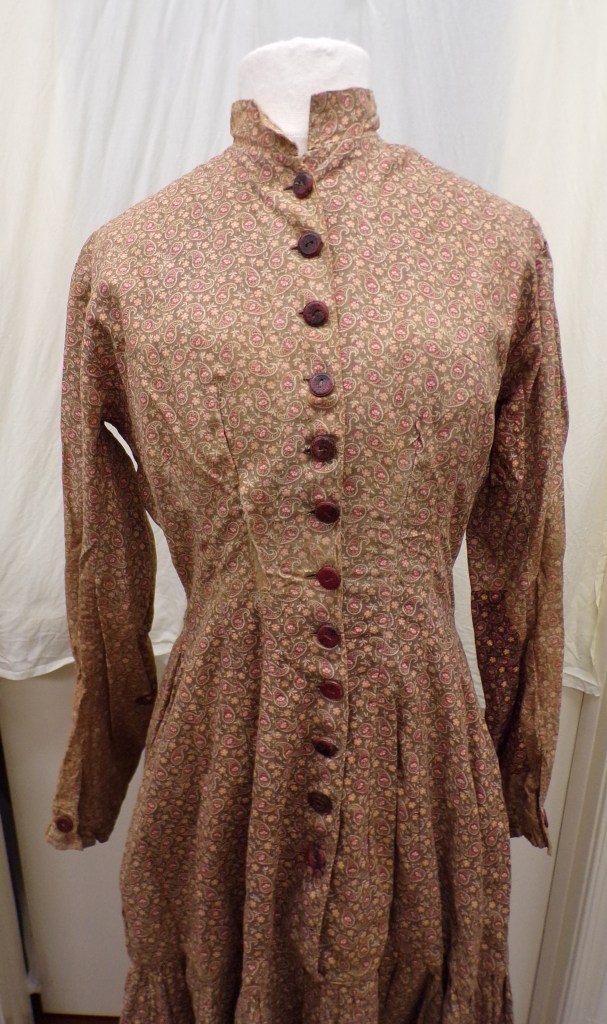
    Here’s an example of a late-19th-century gown, that’s been in the museum collection since 1985, and had never been digitally photographed for documentation. While I didn’t keep count, approximately 3 dozen garments needed to be mounted and photographed prior to re-packing.

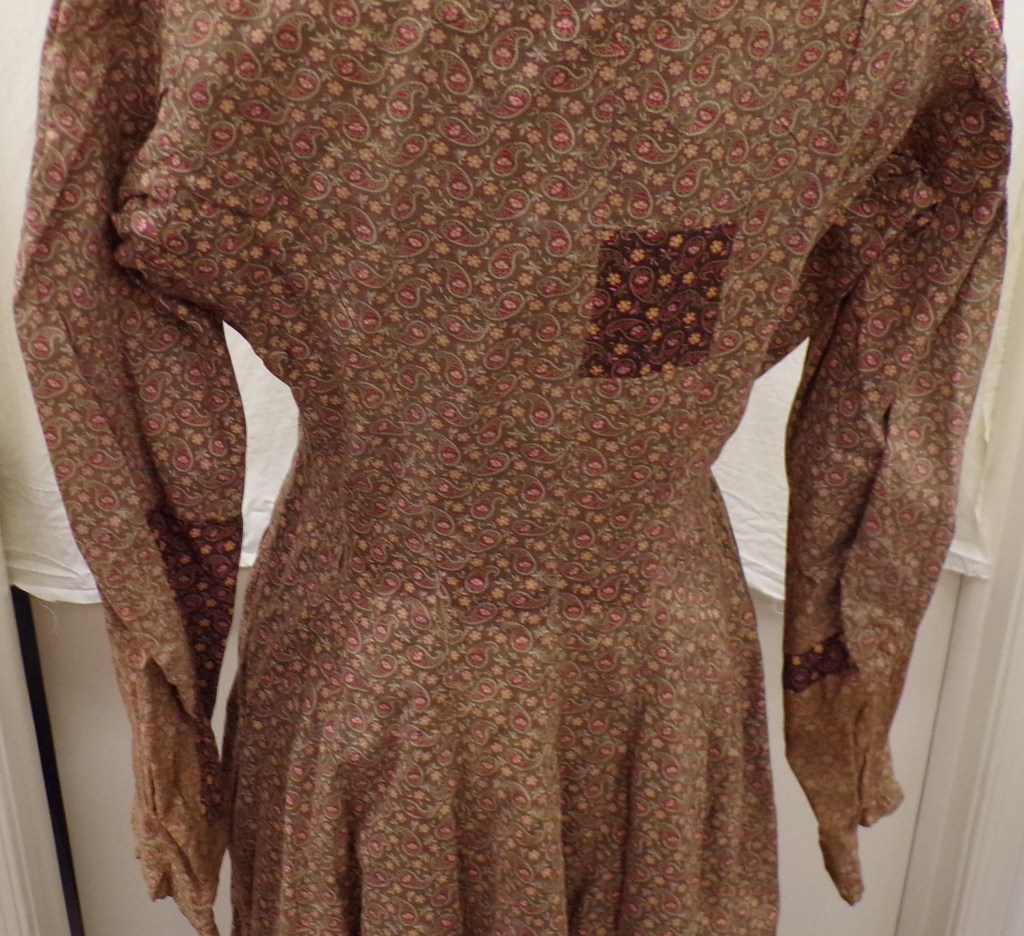
    Fortunately, we don’t typically go through the trouble of a full-exhibit mannequin display for internal documentation purposes–a proper display takes hours for a single garment–but I did ensure to capture damage and unique features that help document an object’s condition and assist in interpreting the object’s history. Here we can see repair patches to the back and sleeves that witness the dress’s long life in service. The faded sleeves indicate that in its last iteration it likely served as a house dress, worn for utility while performing chores like washing that particularly affected the sleeves. Occasionally, we’re fortunate to have provenance back to the original owner, which provides another avenue to present insight into the lives of the people who owned, made, altered, and wore the garments.

    Storage is both a science and an art, and a museum professional needs to make decisions that weigh the compromises between ideal and practical storage solutions. In this case, the first major decision–whether to box or to hang the garments–had already been made. After cataloging, each piece needed to be carefully folded and wrapped in acid-free tissue paper, with supports padding where appropriate for sleeves, skirts, and folds made strategically to minimize wrinkling and stress over the coming decades, to ensure these artifacts are still around and presentable to educate museum visitors in the future to come.

    For me, the internship extended the training and theoretical education I received in HIST 542: Textile History & Museum Methods. My work at the Fashion Archives allowed me to apply those skills kinetically, which will help me retain and better apply knowledge gained in the classroom. I came out of the course with a developing confidence in textile artifacts; I came out of the internship fully prepared to deploy those skills!

    August 21, 2025
    art, exhibition, history, museum, pastperfect

  • Conserving Bound Volumes

    Charles William Stores Fall & Winter 1919 Catalogue

    Historic bound paper documents frequently exhibit inherent vice. Lignin- and acid-free paper rarely appeared until recently, and even without these concerns, bindings deteriorate from frequent use, and damage accumulates. Conservators fight a delaying battle, weighing access against preservation. Conservation expenses can easily reach thousands of dollars for a single volume, and most institutions charged with caring for documents struggle to rebind and preserve even a meaningful portion of their collections.

    Fortunately, an inexpensive option exists to aid preservation. Boxing a bound volume does not improve its condition, but with a little time and minimal expenses, it serves as an accessible action that even low-budget institutions can utilize to minimize deterioration from handling and storage.

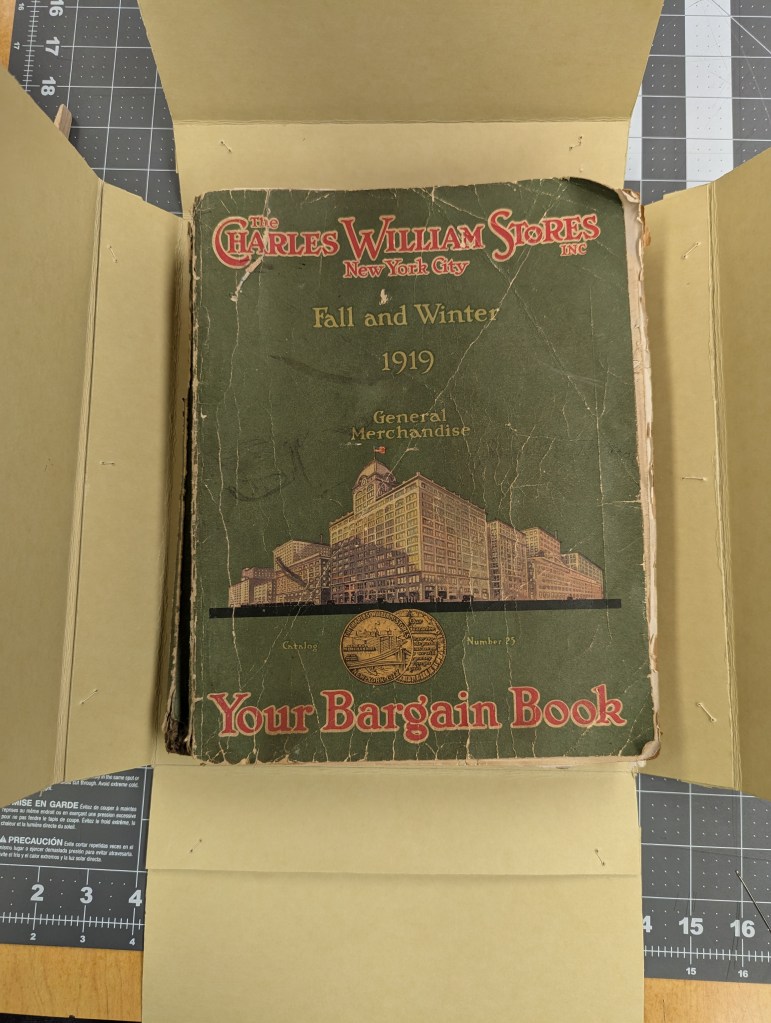
    Mail-order catalogues–the “Amazon” of the 19th to late-20th centuries–offer extensive insight to the material culture of their times. Sadly for historians, their publishers constructed them for use for only a season, or perhaps a year, before replacement. Their vulnerability makes them “Prime” candidates for boxing. The 1919 Charles William catalog above suffers from acid-embrittled paper, loose sheets, and a bent spine.

    Conservation and museum supply stores offer several sizes of pre-made boxes, but the volume should fit snuggly to prevent movement, and with a little practice, anyone can neatly build a custom-fit storage solution. Required materials include acid-free archival cardboard, a steel rule, and Exacto-type knife. A little planning makes the job easier, and avoids waste. The Charles William catalog required a little extra room to accommodate its distorted spine.

    This design can be cut from a single sheet, but a conservator can also cut and then stitch separate flaps with simple cotton thread, conserving supplies as well as the volume. Carefully score bends with the knife before forming them for a sharp, neat appearance.

    A simple square of adhesive hook-and-fastener tape secures the closure.

    In spite of the boxing, this catalog remains unsuitable for upright shelving, and belongs in horizontal storage, although it can now be stacked with other volumes more confidently. Assess the condition and stability, and employ common sense. With a little effort, any institution can prolong the life of its increasingly irreplaceable resources, even on a budget.

    Special thanks to Dr. Karin Bohleke, Director of the Fashion Archives & Museum of Shippensburg University, who teaches object mounting as part of HIST 542: Textile History & Museum Methods at Shippensburg University

    July 16, 2025

  • David Gum & StoryCorps

    1960s Bartow, West Virginia

    I am quite negligent in updating the site–such is the life of a full time employee & (technically) full time graduate student & full time family man!

    Last semester (Fall 2024) we briefly explored the art of oral history, and I interviewed retired former coworker David Gum. Dave taught me much about work and about life, and it is an honor to share some of the many stories I have heard about Dave’s childhood with the world.

    Find the recorded oral history at StoryCorps:

    “You did one of three things, or two of three things, or all three”: David Gum Tells Stories of Life in Bartow, West Virginia in the 1960s

    June 25, 2025

  • Captive Pennsylvania

    An 18th Century History Podcast

    Episode #1: Background, or, “The Conococheague Institute Episode”

    The audio (literally!) speaks for itself. Listen in to a conversation with the Conococheague Institute’s Matthew Wedd about colonial Pennsylvania in the midst of the Seven Years’ War (French & Indian War) and Pontiac’s War.

    I cannot take credit for the wonderful graphic image, which JJ Miller created using Canva.

    Find the Conococheague Institute online at https://cimlg.org/, and be sure to visit and experience their excellent historical interpretation in person, too!

    Captive Pennsylvania – Episode 1 SourcesDownload

    April 25, 2025

  • The Hefflefinger Ledger

    Preserving a 19th-Century Day Book

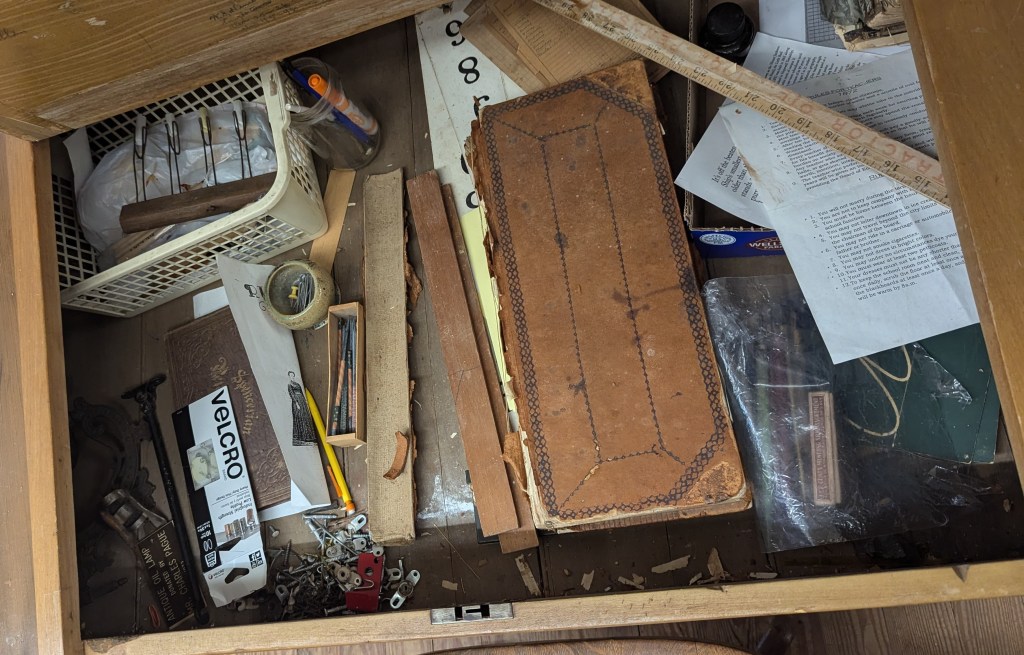
    The original storage condition of the Hefflefinger Ledger

    Shippensburg University’s Little Red Schoolhouse possesses a ledger belonging to John Hefflefinger, who was once a local official in the Newburg, PA area. The ledger is in poor physical condition, with the front cover and spine completely detached, although most of the content pages are in readable condition.

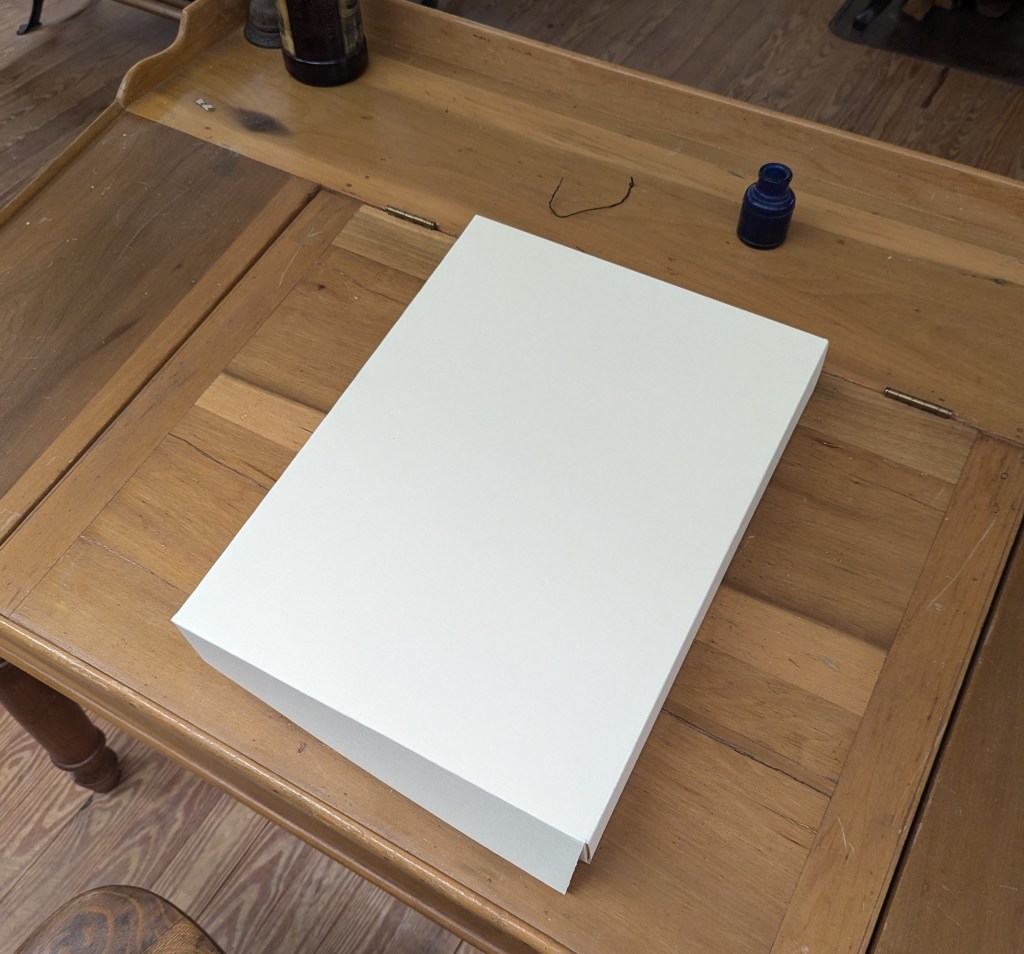
    Using equipment at the Ezra Lehman Memorial Library at Shippensburg University, I digitized the ledger so that we can begin to study its contents without further damaging the volume. I also boxed the volume in archival acid-free tissue paper and cardboard, to preserve the physical object. The work will ensure historians’ access to the volume and its valuable content.

    One of the inserted documents in the Hefflefinger Ledger, now fully digitized

    The ledger contains entries pertaining to personal, legal, educational, and other business from the mid- to late-nineteenth century. Various inserts including a business card and correspondence further add to the ledger’s historical value. It has not yet been fully analyzed an a primary document, but thanks to its digitization, it will soon be available to historians and other researchers.

    Special thanks are due to Melanie Reed, of the Lehman Library’s Special Collections department, for providing advice and materials, and to Jeff Milburn, for the use of the library’s Inter-Library Loan department overhead scanner.

    The digital scan of the ledger should be available soon at the Lehman Library.

    After preservation in an acid-free archival box

    January 18, 2025

Blog at WordPress.com.


Loading Comments...
 

    • Subscribe Subscribed
      • Historical Chesnuts
      • Already have a WordPress.com account? Log in now.
      • Historical Chesnuts
      • Subscribe Subscribed
      • Sign up
      • Log in
      • Report this content
      • View site in Reader
      • Manage subscriptions
      • Collapse this bar